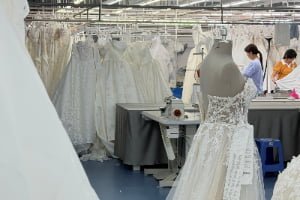
Receiving a wedding dress that does not meet quality expectations can be a major problem for any brand, leading to returns and damaged reputation. The challenge is ensuring every bridal gown reflects perfection before it ever leaves the factory floor. Many wonder, "How many times should a wedding dress be inspected before shipping?"
A comprehensive wedding dress quality control system typically requires at least four major inspection stages: incoming raw material checks, in-process production reviews, completed-garment evaluation, and a final pre-shipment inspection1. Each stage targets different types of potential flaws, ensuring that quality issues are caught and corrected when they are easiest and least costly to resolve2, preventing costly delays and customer dissatisfaction down the line.
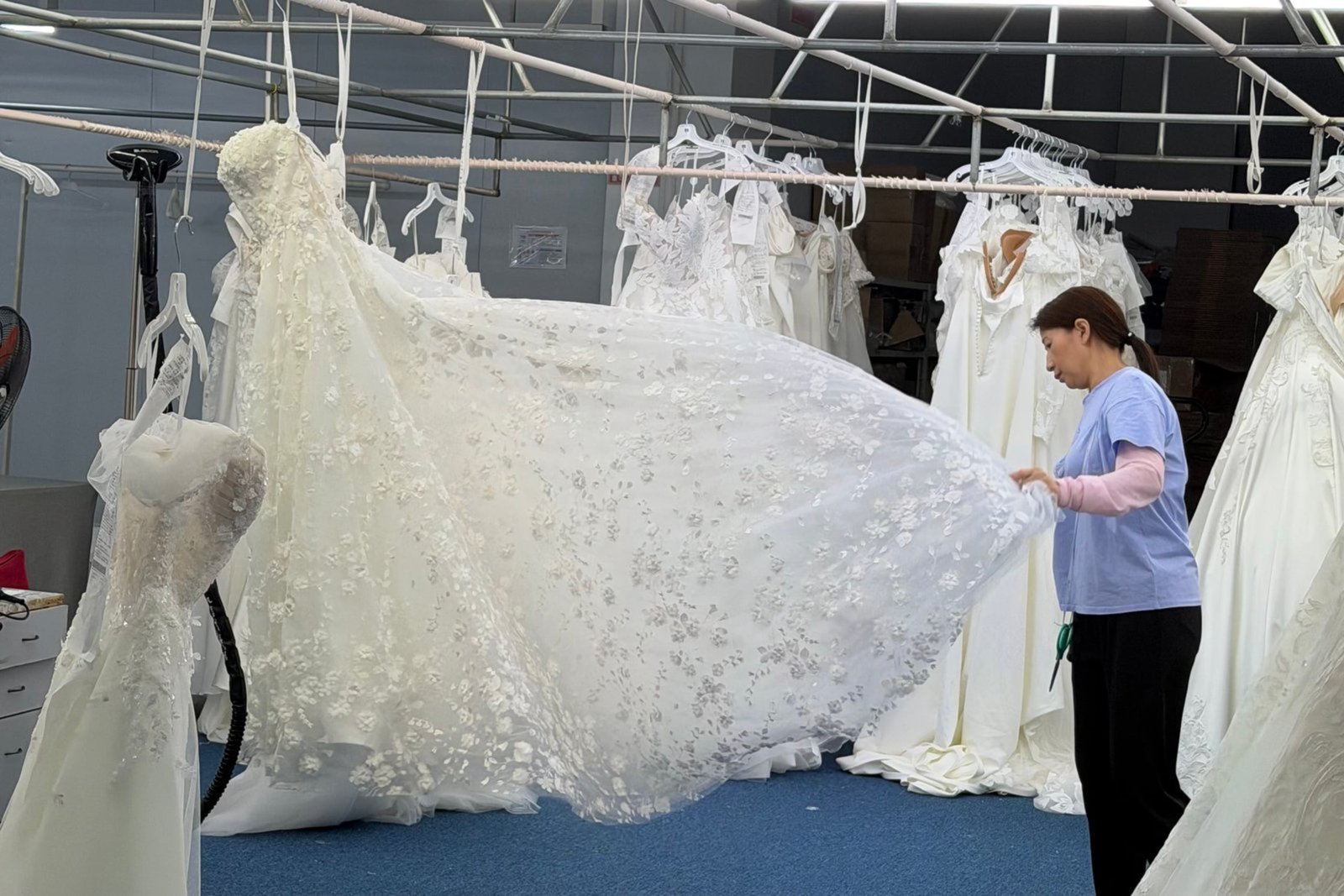
Navigating the complexities of bridal gown production means understanding that no single inspection can guarantee flawless quality. Instead, a strategic, multi-layered approach to wedding dress inspection proactively identifies and mitigates risks throughout the manufacturing journey, ensuring consistency and brand integrity.
Why Is Pre-Shipment Wedding Dress Inspection Critical?
Ensuring a wedding dress is perfect before it reaches a boutique or, worse, a bride, is paramount for any bridal brand. A single defect can tarnish a brand's reputation and lead to costly returns. The real question is not just if a wedding dress inspection happens, but when and how effectively it is performed to prevent issues from escalating.
Pre-shipment wedding dress inspection is critical because it acts as the final gatekeeper3, preventing flawed garments from reaching the end-customer. However, relying solely on this last check can be incredibly risky; many significant quality issues become irreversible or prohibitively expensive to fix once a dress is fully constructed, underscoring the need for earlier, ongoing quality control throughout the entire production process.
Dive Deeper: The Hidden Costs of Late Detection
From my perspective on the factory floor, I have learned that the true cost of quality isn't in performing inspections, but in not performing them effectively at each stage. When a major flaw in a wedding dress is only discovered during the final pre-shipment inspection, the ripple effects can be devastating for a brand. Imagine a gown with an uneven hem or mismatched lace appliqué, only found moments before it's supposed to ship. At that point, the entire dress might need to be remade, leading to significant delays. This directly impacts delivery schedules, causes stress for retailers, and can disappoint brides, potentially costing a brand future orders.
We often see issues with intricate details, like the placement of delicate beads or the alignment of a corset bodice. If a beadwork pattern is off-center or the bodice structure is slightly asymmetric, these problems become incredibly difficult, if not impossible, to correct without deconstructing large parts of the wedding dress. This means re-cutting fabric, re-sewing, and re-applying handwork, all of which consume valuable time and resources. The labor cost involved in rectifying these late-stage defects can sometimes exceed the original production cost of the garment itself.4 Furthermore, such delays can cause a brand to miss critical selling seasons, leading to lost revenue and potential damage to its market presence. The goal of early and thorough inspection is not just to find problems, but to find them when they are small and inexpensive to fix, safeguarding both the product's quality and the brand's profitability.
What Are the Key Stages of Wedding Dress Inspections?
When considering the intricate craftsmanship of a bridal gown, one might ask, "What are the key stages of wedding dress inspections?" A single final check simply cannot uncover all potential flaws in such a complex garment. Instead, a multi-stage approach is essential to ensure consistent quality from raw material to finished product.
A robust wedding dress inspection process typically involves at least four critical stages: incoming raw material inspection, in-process or half-finished garment inspection, completed-garment inspection, and a final pre-shipment audit. Each stage serves a distinct purpose, designed to catch specific types of defects early, thereby minimizing costly rework and ensuring the final product meets the highest standards.
Dive Deeper: A Layered Approach to Quality Assurance
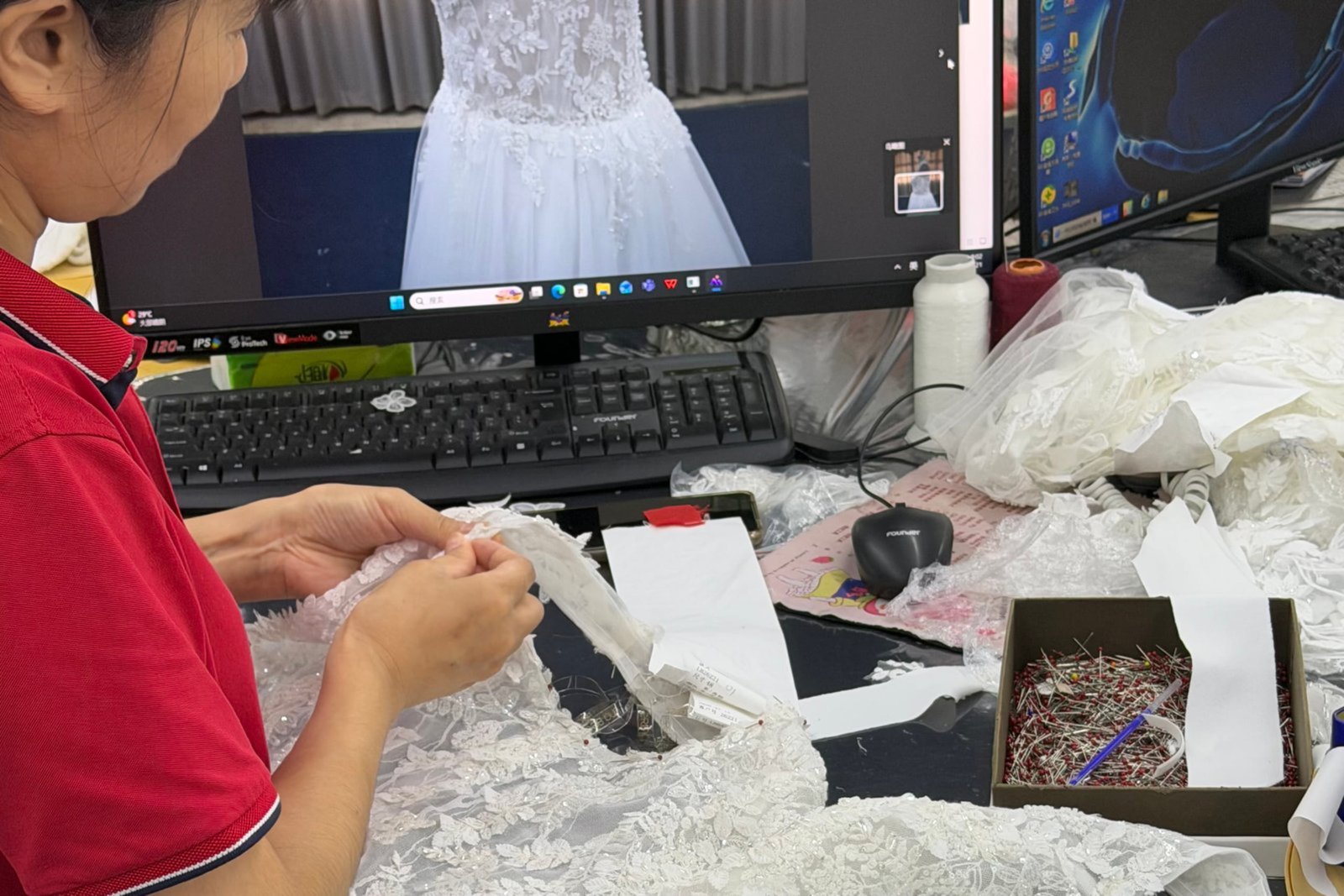
From my experience managing quality control in a bridal factory for many years, I can tell you that successful wedding dress production hinges on a layered inspection system. This isn't just about ticking boxes; it's about embedding quality at every step.
Incoming Raw Material Inspection
This is the very first line of defense. Before a single cut is made, all fabrics, laces, embellishments, zippers, and threads undergo a thorough review. We check for:
- Fabric defects: Holes, snags, stains, color variations, inconsistent weave, or slubs.
- Lace and appliqué quality: Symmetry, density, pattern consistency, and any damage.
- Color matching: Ensuring all components match the approved swatches and maintain color consistency across dye lots.5
- Measurements and weight: Verifying that materials meet specified standards.
Catching a fabric defect here prevents us from wasting time and labor cutting and sewing a flawed piece6, which would later be scrapped. I have personally seen how a small, uninspected stain on a bolt of silk can lead to an entire panel being unusable, causing delays in production.
In-Process/Half-Finished Garment Inspection
This stage is arguably the most crucial for complex items like wedding dresses. It's not one single check, but several checkpoints integrated throughout the sewing process.
- Cutting accuracy: Ensuring pieces are cut precisely according to patterns.
- Seam quality: Checking stitch tension, straightness, and security of seams.
- Bodice structure: For corseted bodices, this is critical. We inspect the boning placement, interlining, and cup integration when the bodice is partially assembled, before it's fully enclosed. This allows for adjustments that would be impossible later.
- Lace and appliqué placement: Reviewing the initial positioning of delicate handwork before it's permanently attached. This is where we ensure symmetry and aesthetic balance.
- Waistline and skirt attachment: Checking that the skirt is evenly gathered or placed and correctly aligned with the bodice.
This stage is essential because it catches construction errors that, once completed, become part of the garment's fundamental structure. Fixing a misaligned seam or incorrect boning after the entire dress is sewn means ripping it apart, which is highly inefficient and risks damaging the fabric.
Completed-Garment Inspection
Once the wedding dress is fully assembled, but before final pressing and packaging, it undergoes a comprehensive review. This focuses on the overall aesthetic and construction integrity.
- Overall fit and proportion: Checking against the approved size specifications and mannequin.
- Symmetry: Ensuring both sides of the dress, especially for details like straps, sleeves, or skirt panels, are perfectly symmetrical.
- Hemline evenness: Verifying the hem is perfectly balanced and falls correctly.
- Embellishment integrity: Checking that all beads, sequins, and lace appliqués are securely attached and complete.
- Cleanliness: Inspecting for any marks, dust, or smudges accumulated during production.
- Zipper and closure functionality: Ensuring all fastenings work smoothly.
This inspection allows for minor corrections, like loose threads or small smudges, but major structural issues at this point would indicate a failure in the in-process checks.
Final Pre-Shipment Audit
This is the last chance to verify that the wedding dress meets all final requirements before it leaves the factory.
- Full visual inspection: A final look for any missed defects.
- Measurement verification: A spot check of key measurements against the specification sheet.
- Hang tag and label accuracy: Ensuring all branding, size, and care labels are correct.
- Packaging integrity: Confirming the dress is correctly folded, protected, and placed in appropriate packaging to prevent damage during transit.
- Quantity check: Verifying the correct number of dresses are prepared for shipment.
This audit confirms that the entire batch meets the quality standard, not just individual samples.7 It gives both the factory and the brand confidence that what is shipped is what was ordered, in perfect condition.
Does a Final Wedding Dress Inspection Suffice?
Many businesses might assume a single, thorough check at the very end of production is enough for a wedding dress. However, this raises a crucial question: "Does a final wedding dress inspection suffice?" The reality for such an intricate garment tells a different story.
A final wedding dress inspection, while absolutely necessary, is insufficient on its own to guarantee consistent quality. For a complex garment like a bridal gown, many quality risks—such as bodice structure, lace alignment, or specific hand-beaded details—become extremely difficult, if not impossible, to correct once construction is complete. Relying solely on this last check can lead to costly delays, extensive rework, and the potential for shipping defective products, highlighting the need for continuous quality control.
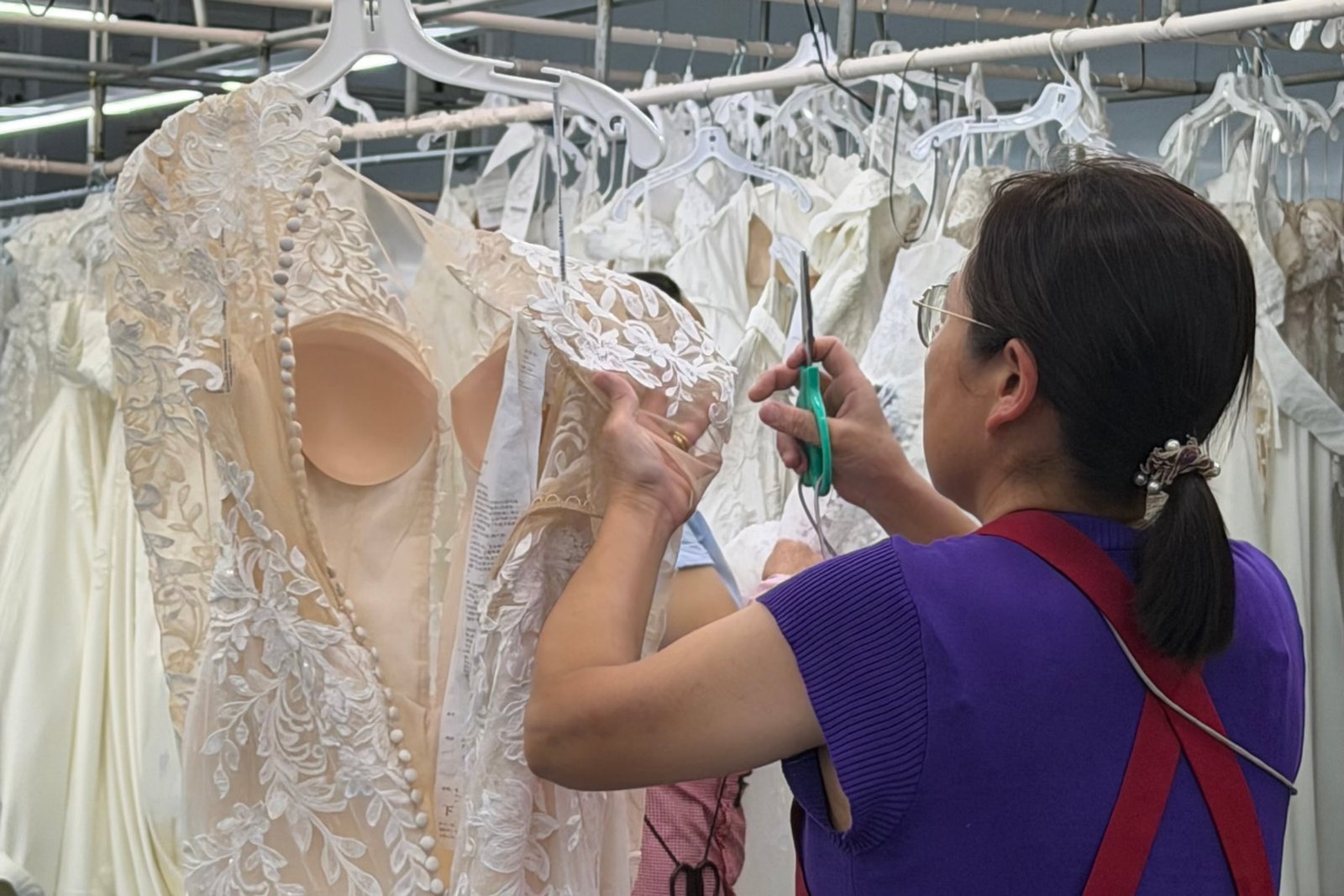
Dive Deeper: Why Process Control Outweighs End-of-Line Checks
Based on my experience, I've observed that expecting a final inspection to catch all potential flaws in a wedding dress is like trying to fix a leaky pipe after your house is already flooded. It's too late, and the damage is often extensive. The specific nature of bridal wear, with its delicate fabrics, intricate construction, and often extensive handwork, demands a proactive approach to quality.
Consider the bodice structure of a wedding dress. Many gowns feature complex corsetry or internal boning designed to provide specific support and shape. If the boning is incorrectly placed, or the cups are misaligned during the initial stages of assembly, rectifying this after the outer fabric, lining, and perhaps even delicate lace overlays have been stitched together is a monumental task. It involves deconstructing the bodice, often risking damage to the materials, and then rebuilding it. This process is time-consuming, expensive, and can introduce new imperfections. By contrast, an in-process check of the bodice structure before the layers are fully enclosed allows for simple, quick adjustments.
The same principle applies to lace placement and appliqué symmetry. Hand-applying lace to achieve a seamless, natural look is an art. If the pattern is uneven or misaligned on one side, it becomes glaringly obvious. Correcting this after the lace is stitched down might mean carefully unpicking hundreds of stitches, which can fray delicate lace edges or leave visible needle marks on the underlying fabric. This also applies to the waist joining, where the bodice meets the skirt; if it's not perfectly level, the entire garment will hang improperly. Ensuring these details are correct during mid-production checks prevents these issues from becoming permanent flaws.
While a third-party inspection or a pre-shipment inspection is vital for an objective, final assessment, it should serve as a confirmation of existing quality, not as the primary quality control mechanism. These external checks are excellent for verifying that the final product meets specified criteria, quantity, and packaging requirements, but they cannot replace the ongoing process control that prevents deep-seated structural issues. For a brand, this means understanding that a supplier's internal process control is the real guarantor of quality and consistency, reducing the risk of costly returns and unhappy customers.
How Does Bodice Appliqué Impact Wedding Dress Inspection Needs?
The intricate beauty of a wedding dress often comes from its delicate embellishments, especially lace appliqué on the bodice. This detail can significantly influence how quality control is performed, leading to the question, "How does bodice appliqué impact wedding dress inspection needs?" It's not a simple one-time check.
Bodice appliqué fundamentally increases the frequency and complexity of wedding dress inspections. Due to its delicate nature, intricate placement, and potential for asymmetry or detachment, appliqué requires multiple, targeted checks: after initial placement, after preliminary stitching, after full attachment, and during final symmetry and integrity reviews. This rigorous, multi-stage inspection process is further complicated by size grading, as the aesthetic balance of appliqué must be maintained across a range of garment sizes.
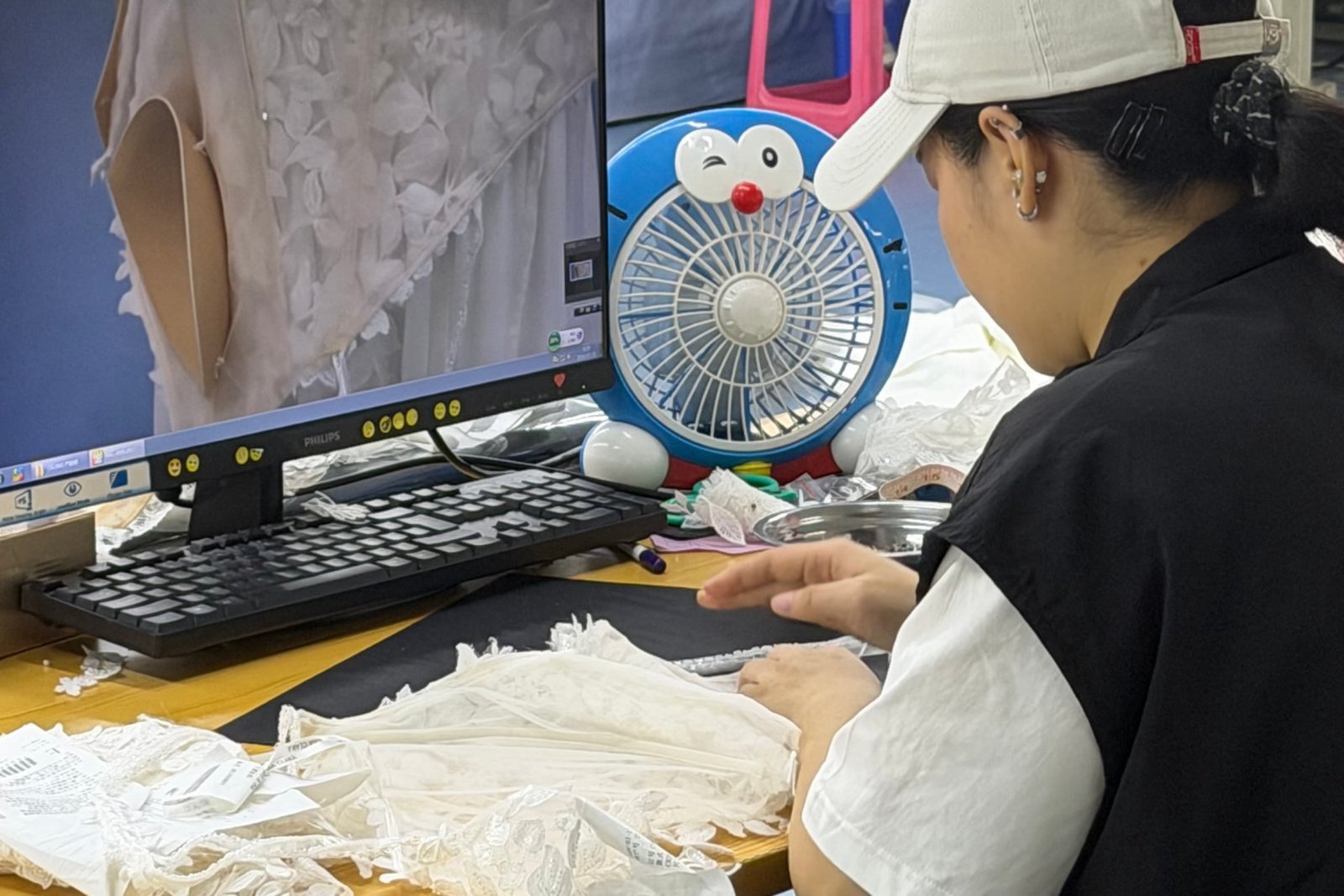
Dive Deeper: Precision Checks for Intricate Bodice Details
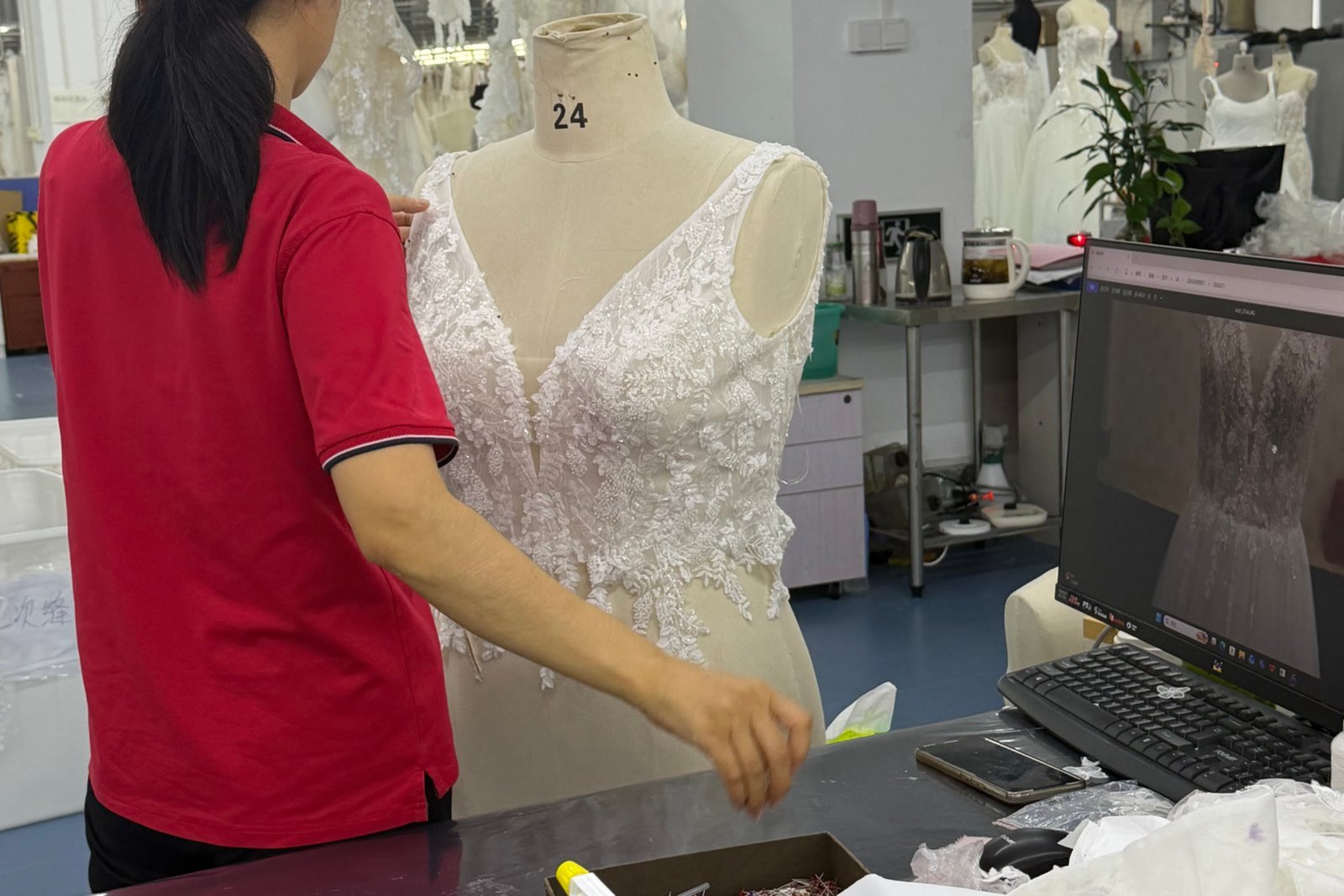
From my vantage point in production, I can confirm that wedding dress bodices with heavy lace appliqué are perhaps the single most demanding area for quality control. This is where craftsmanship truly meets meticulous inspection. The challenge isn't just adhering the lace; it's making it look like an organic extension of the garment, perfectly symmetrical and balanced across all sizes.
Consider a heavily appliquéd bodice. The process begins with carefully cutting individual lace motifs from larger pieces. This alone requires precision. Then, these motifs are meticulously placed onto the bodice base fabric. Our inspection points for this specific detail often include:
- Initial Placement Check: Once the lace motifs are temporarily pinned or basted onto the bodice, a quality control team member or supervisor reviews the overall design. Is the pattern balanced? Are the motifs evenly distributed from left to right? Does it match the approved sample design? This check happens before any permanent stitching. We want to catch any major design discrepancies at this stage, as it is easy to reposition the lace.
- Preliminary Stitching/Tacking Check: After the lace is lightly tacked down to hold its position, we perform another inspection. This ensures that the lace is securely held, but also allows us to verify that the full design is coming together as intended before extensive, time-consuming hand-stitching begins. If a motif is slightly off, it's still relatively easy to adjust.
- Full Appliqué Attachment Check: Once all the lace is fully stitched and secured – often by hand – we conduct a detailed examination. We look for:
- Secure attachment: No loose edges or detached motifs.
- Cleanliness: No visible glue residue (if adhesive is used) or dirty marks on the lace or fabric.
- Symmetry and consistency: Ensuring the lace pattern flows seamlessly and matches across the bodice, especially important for mirrored designs.
- Texture and drape: Confirming the lace doesn't pull or pucker the underlying fabric.
The complexity is further amplified by size grading. A lace pattern that looks perfect on a size 0 sample might appear stretched or compressed on a size 30. For instance, while the central motifs on a neckline might remain consistent, the side placement of lace on a larger bodice needs careful re-evaluation. A simple scaling of the pattern might not work; often, we need to adapt the placement or even add additional motifs to maintain the aesthetic integrity across different sizes. This requires an experienced eye during the inspection process, ensuring that the brand's design vision is consistently realized, regardless of the size ordered. These detailed, multi-stage checks for bodice appliqué are vital to prevent costly reworks and guarantee the dress arrives looking exactly as the designer intended.
What Defines an Effective Wedding Dress Inspection Point?
When setting up quality control for bridal gowns, one might wonder, "What defines an effective wedding dress inspection point?" It's not about adding more inspections randomly; each check must have a clear purpose and measurable outcome.
An effective wedding dress inspection point is defined by its ability to catch a specific type of quality risk at the earliest possible stage, before it becomes expensive or impossible to correct. Each such point should have a clear purpose, a defined standard for comparison, and focus on preventing a particular defect type, such as fabric flaws, construction errors, aesthetic inconsistencies, or final presentation issues, directly mitigating potential brand risks like returns or customer complaints.
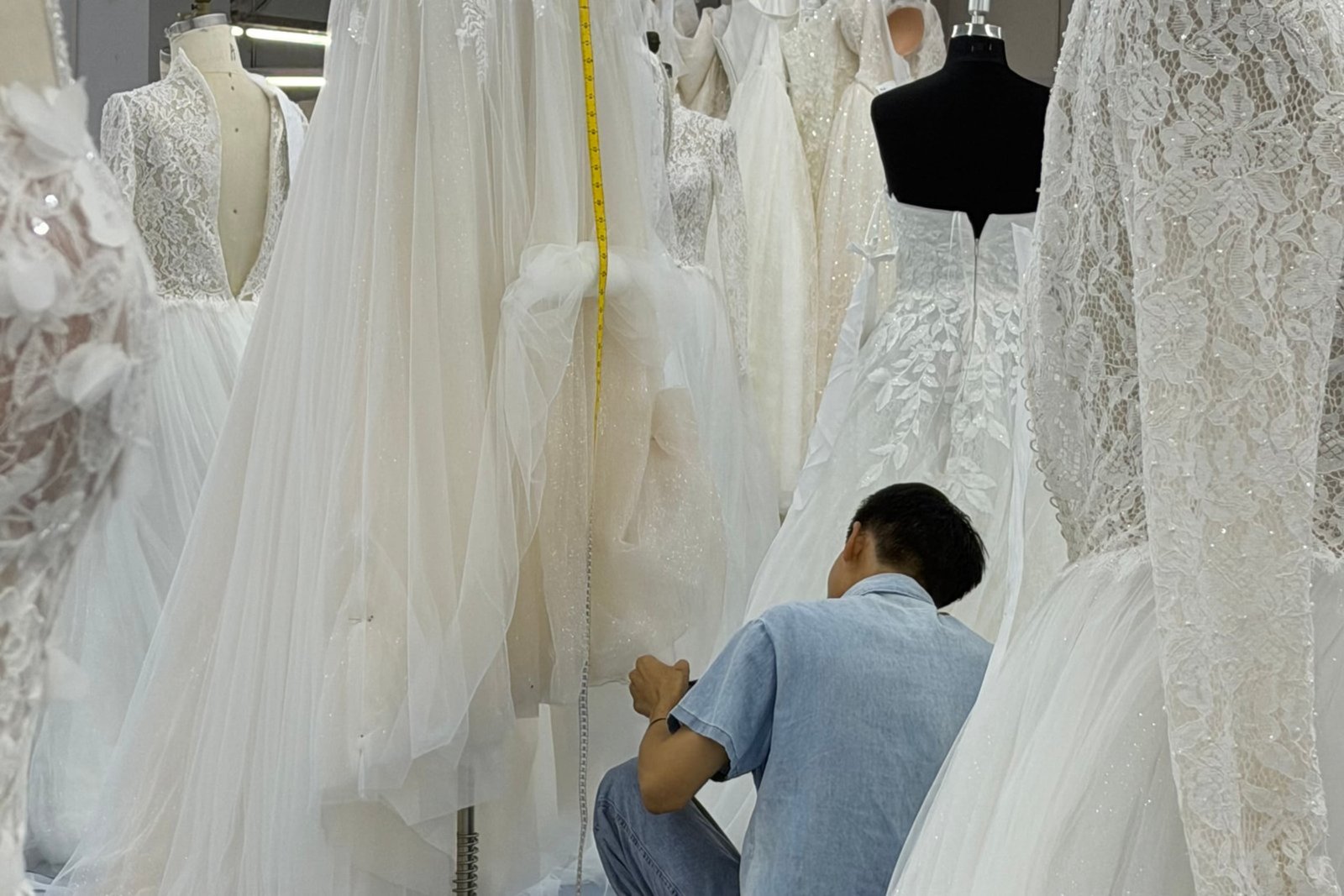
Dive Deeper: Purpose-Driven Quality Checks
From my years on the factory floor, I have observed that an effective wedding dress inspection system is built on intention, not just volume. More inspections don't automatically mean better quality; smarter inspections do. Each quality control point must be purpose-driven, designed to prevent a specific set of risks that could ultimately impact the brand's reputation and bottom line.
Here's how we typically define and implement effective inspection points:
- Fabric Defects (Incoming Inspection):
- Purpose: To prevent the cutting and sewing of materials with inherent flaws (holes, stains, snags, color variations).
- Risk Mitigation: Avoids wasted labor, fabric, and time if a large panel needs to be recut, which directly translates to production delays and increased costs for the brand. A stained dress causes immediate rejection.
- Construction Accuracy (In-Process Inspection):
- Purpose: To ensure that seams are straight, tensions are correct, and all garment pieces are correctly aligned and sewn according to the pattern. This includes checking boning, interlining, and initial lace placement.
- Risk Mitigation: Prevents structural issues like an ill-fitting bodice, uneven hemlines, or crooked details that are nearly impossible to fix later. A poorly constructed dress leads to uncomfortable wear for the bride and a high return rate for the brand.
- Lace/Appliqué Placement and Symmetry (In-Process/Completed Inspection):
- Purpose: To verify that intricate handwork, such as lace motifs or beadwork, is precisely positioned, securely attached, and symmetrical.
- Risk Mitigation: Guards against aesthetic flaws like mismatched patterns or loose embellishments that diminish the perceived value and beauty of the dress. An uneven lace pattern is a visible defect that can generate customer complaints.
- Size and Proportion on Mannequin (Completed Inspection):
- Purpose: To confirm the overall fit, drape, and proportional balance of the wedding dress, comparing it against the approved size specifications.
- Risk Mitigation: Ensures the dress will fit as expected across different sizes, reducing fit-related returns and enhancing customer satisfaction. An ill-fitting dress is a significant brand risk.
- Cleanliness and Finish (Completed & Final Inspection):
- Purpose: To ensure the garment is free from dirt, marks, loose threads, and that all buttons, zippers, and closures are functional and well-finished.
- Risk Mitigation: Prevents minor but visually impactful flaws that can make a dress look unprofessional or cheap. A dress with loose threads or a stuck zipper creates a poor impression of quality.
- Holes, Tears, and Damage (All Stages):
- Purpose: A constant vigilance against any physical damage that could occur during handling, sewing, or pressing.
- Risk Mitigation: Catches accidental damage early, before it progresses through production and becomes a major defect.
- Final Shipment Readiness (Final Inspection):
- Purpose: To ensure the dress is correctly tagged, packaged, and protected for transit, and that the quantity matches the order.
- Risk Mitigation: Prevents shipping errors, damaged goods during transport, and ensures the dress arrives in pristine condition ready for the boutique.
By meticulously defining the 'what' and 'why' of each wedding dress inspection point, we ensure that every check serves a vital role in delivering a consistently high-quality product, minimizing risks for the brands we serve. This systematic approach is far more effective than simply adding more pairs of eyes.
Frequently Asked Questions
Why is in-process inspection crucial for wedding dresses?
In-process inspection is crucial for wedding dresses because it allows for the detection and correction of complex construction issues, like bodice structure, seam alignment, and initial lace placement, at stages where they are still easy and inexpensive to fix. Correcting these early prevents costly rework and potential damage to delicate fabrics later in the production cycle.
Can third-party inspectors handle all wedding dress quality checks?
Third-party inspectors are valuable for independent verification and final pre-shipment audits, but they cannot replace a factory's internal, continuous, in-process quality control. Many critical checks for wedding dresses, especially those related to structure and intricate handwork, must happen during production, not just at the end, to be truly effective in preventing defects.
How do size variations affect wedding dress inspections?
Size variations significantly affect wedding dress inspections, especially for appliqué and design placement. A design that looks perfect on a sample size may need adjustments for larger or smaller sizes to maintain aesthetic balance and fit. Inspectors must specifically check how design elements like lace or beadwork grade across different sizes to ensure consistent visual appeal and proportion.
Conclusion
Determining how many times a wedding dress should be inspected before shipping isn't about an arbitrary number; it's about a strategic, purpose-driven approach to quality control. From my perspective in bridal manufacturing, a minimum of four distinct stages—incoming materials, in-process, completed garment, and final pre-shipment—are essential. Each wedding dress inspection point serves to catch specific types of defects early, preventing minor issues from becoming costly, irreversible problems that impact delivery schedules and brand reputation. By understanding that process control is paramount, and that a final inspection alone cannot guarantee perfection, bridal brands can work more effectively with their manufacturing partners to ensure every gown delivered is a testament to quality.
Are you looking for a manufacturing partner who prioritizes comprehensive, purpose-driven wedding dress inspections to ensure consistent quality and minimize your brand's risks? Contact us today to learn more about our meticulous quality control processes and how we can support your brand's vision.
"Quality Control in Garment Production: Complete Guide", https://www.oneaimapparel.com/blog/quality-control-garment-production-complete-guide/. Apparel quality-assurance literature commonly describes garment inspection as a staged process that includes raw-material checks, in-process reviews, finished-product evaluation, and final release inspection. Evidence role: general_support; source type: education. Supports: Apparel quality assurance is commonly organized into material inspection, in-process inspection, finished-garment inspection, and final release or shipment checks.. Scope note: This would support the general garment-manufacturing framework, not prove a mandatory four-stage rule specific to wedding dresses. ↩
"Cost of Quality Analysis: Driving Bottom-line Performance Abstract", https://www.uakron.edu/cba/docs/ins-cen/igb/scm/Fall_2008_Cost_of_Quality_Analysis.pdf. Quality-cost models distinguish prevention and appraisal costs from internal and external failure costs, supporting the claim that earlier detection can reduce rework, scrap, and downstream failure expenses. Evidence role: mechanism; source type: institution. Supports: Quality-management sources explain that prevention and early appraisal reduce internal failure, rework, scrap, and downstream defect costs.. Scope note: This is general quality-management evidence and does not quantify the cost difference for bridal gowns specifically. ↩
"Pre-Shipment vs Final Random Inspection: Key Differences", https://ecqa.com/pre-shipment-inspection-vs-final-random-inspection/. Quality-management standards treat product release as a control point at which conformity to specified requirements is verified before delivery to the customer. Evidence role: definition; source type: institution. Supports: Final inspection or release controls verify that finished goods meet specified requirements before delivery or shipment.. Scope note: This supports the inspection function generally; it does not establish wedding-dress-specific procedures. ↩
"(PDF) Defects and its rectification methods in garment production", https://www.academia.edu/82496974/Defects_and_its_rectification_methods_in_garment_production. Studies of apparel rework costs show that defect correction can add substantial labor time and reduce production efficiency, providing context for the economic risk of late-stage correction. Evidence role: statistic; source type: paper. Supports: Empirical or industry research should document the magnitude of rework labor costs in apparel manufacturing and when rework becomes economically disproportionate.. Scope note: Unless a source reports costs exceeding original production cost, the citation would only contextualize the claim and the article should avoid presenting it as generally proven. ↩
"Causes and remedies of batch to batch shade variation in dyeing textilefloor", https://www.academia.edu/29057297/Causes_and_remedies_of_batch_to_batch_shade_variation_in_dyeing_textilefloor. Textile color-evaluation standards and guidance recognize shade variation between dye lots and use controlled color assessment to verify whether materials conform to approved color tolerances. Evidence role: mechanism; source type: institution. Supports: Textile color-control guidance explains that dye lots can vary in shade and that color matching is part of quality evaluation.. Scope note: This supports the need for color control in textiles generally, not a wedding-dress-specific tolerance threshold. ↩
"Fabric inspection", https://en.wikipedia.org/wiki/Fabric_inspection. Textile quality-control references describe fabric inspection before spreading and cutting as a means of identifying stains, holes, shade variation, and other flaws before labor is invested in garment assembly. Evidence role: mechanism; source type: education. Supports: Textile and apparel manufacturing sources explain that fabric inspection before cutting identifies flaws that would otherwise become garment defects and cause waste.. Scope note: This supports the manufacturing mechanism generally, not the author’s specific factory example. ↩
"ISO 2859-1", https://chemistry.unt.edu/~tgolden/courses/iso2859-1.pdf. Acceptance-sampling standards such as ISO 2859 evaluate a production lot by inspecting a defined sample against acceptance criteria, providing statistical lot-level assurance rather than proof that every unit is defect-free. Evidence role: definition; source type: institution. Supports: Acceptance-sampling standards explain how lots or batches are assessed using sampled units and acceptance criteria.. Scope note: This citation would qualify the article’s wording: a sampled audit supports batch acceptance, not absolute confirmation of the entire batch. ↩