Every year around this time, our product development team starts seeing early signals—not from fashion week reports or Instagram predictions, but from the sample requests landing on our production floor. These inquiries from bridal brands planning their 2027 collections tell us which design directions are moving from concept sketches into actual prototypes. The gap between "trending on Pinterest" and "ready to manufacture at scale" is larger than most people realize1, and that gap shapes which trends actually make it to market.
From our factory's perspective, the 2027 bridal trends question is not about what looks visually appealing in editorial shoots—it is about which early design signals can be developed, fitted, accessorized, and produced without creating inventory risk or quality inconsistencies. We are seeing three specific areas where sample requests have shifted noticeably: cat-eye necklines evolving through softer shaping variations, detachable styling pieces increasing from one or two add-ons to four or five per dress, and skirt structures changing beneath the surface through new materials that create volume without visual heaviness.
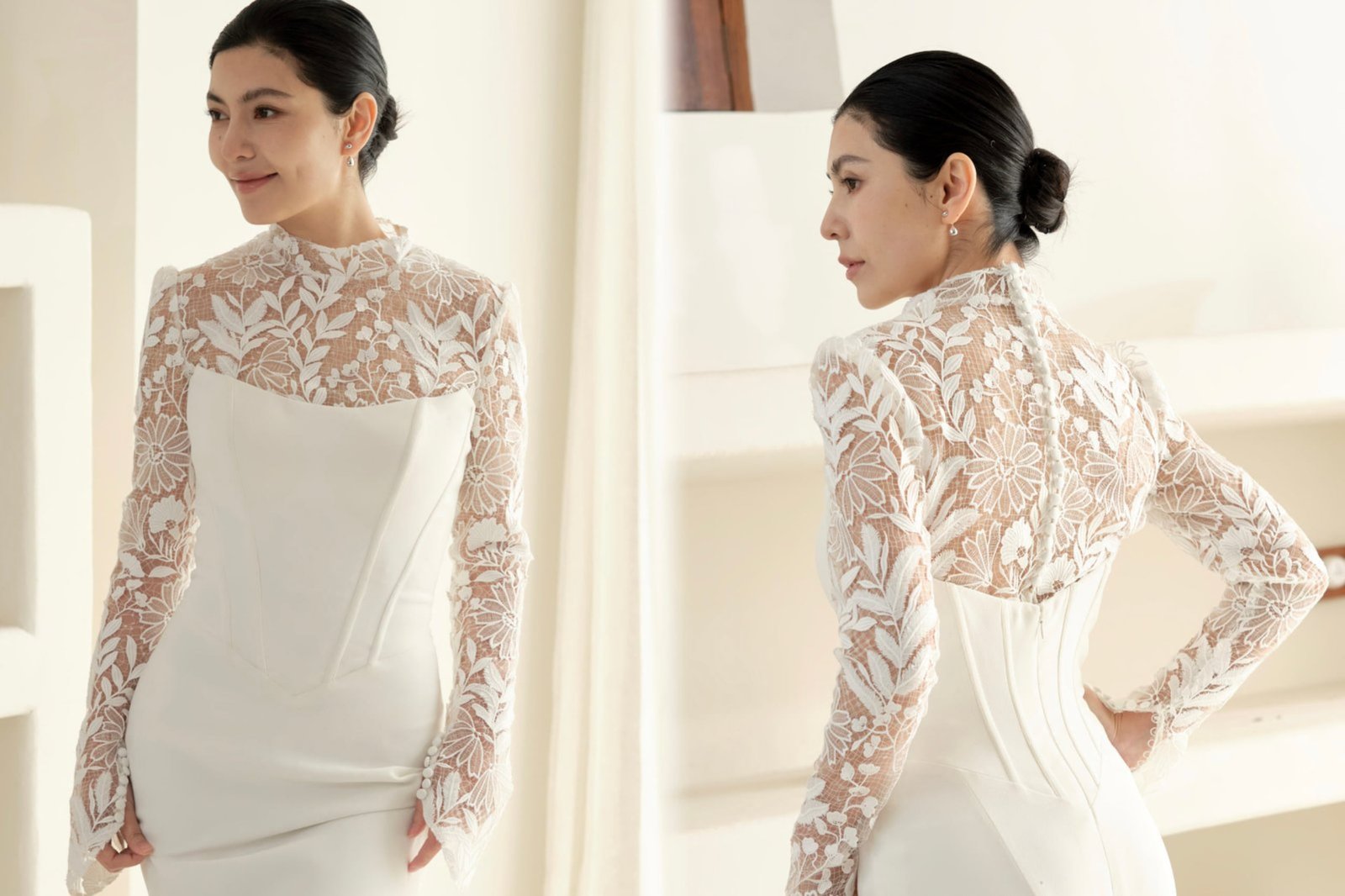
I want to be clear about what this article is not: this is not a fashion magazine's trend forecast based on runway shows or social media analytics. These observations come from what we are building right now in our development department—the patterns we are drafting, the materials we are testing, and the construction challenges we are solving for brands preparing their 2027 sample collections. Some of these signals will grow into significant trends; others will remain niche preferences. The value for product development teams and boutique buyers is knowing which directions are already moving into the testing phase.
Is the Cat-Eye Neckline Really Staying for 2027?
The real question is not whether cat-eye necklines are staying—it is how they are evolving beyond the sharp, angular versions we saw dominate 2025 collections.
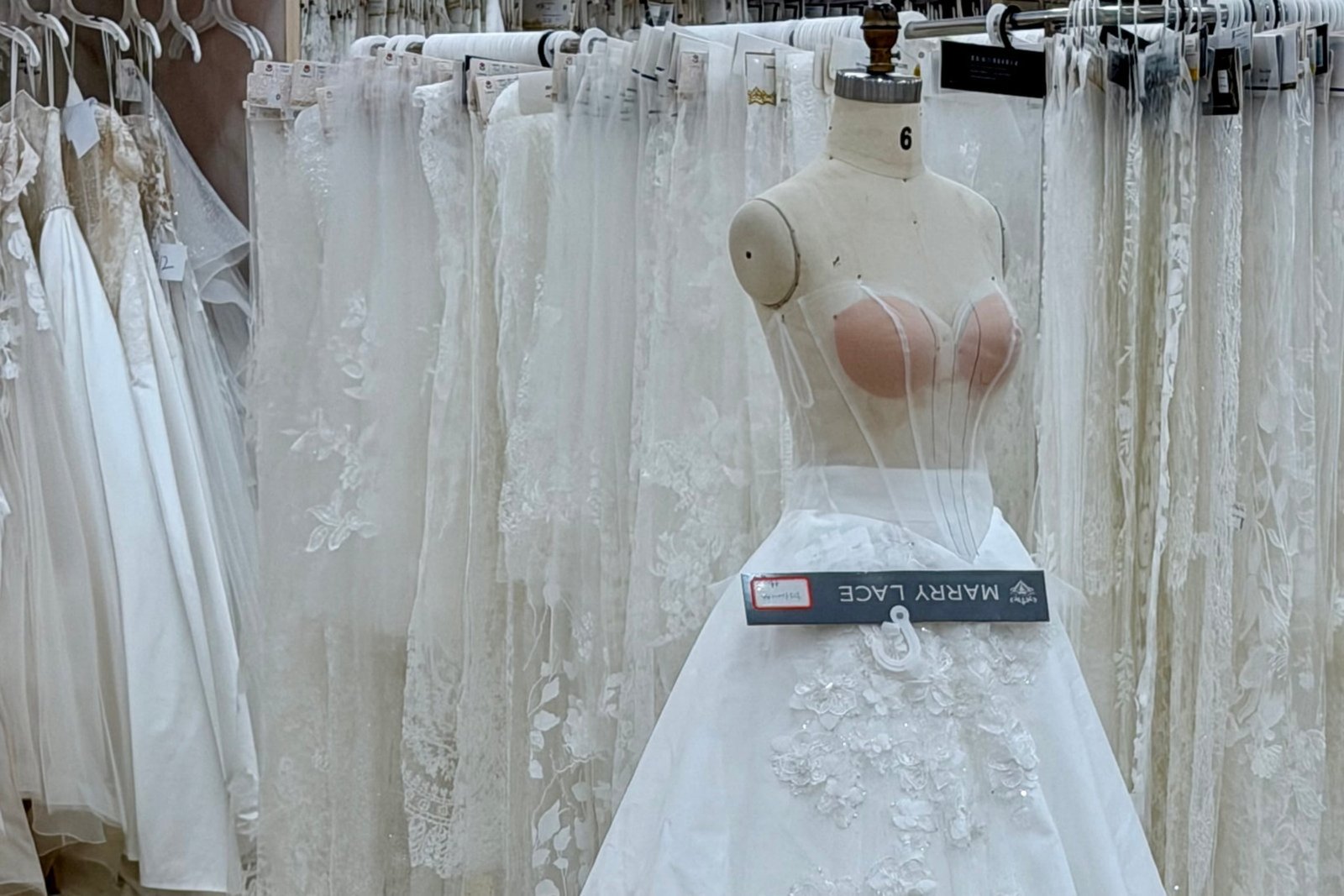
Cat-eye necklines are not disappearing in our 2027 sample requests; instead, we are seeing them shift toward softer curves, petal-like shaping, and more refined variations on strapless bodice construction. Brands are requesting samples that maintain the elongated shoulder line but replace the sharp points with gentler, more romantic curves that photograph well from multiple angles.
The Construction Shift Behind This Evolution
From a pattern-making perspective, the change sounds subtle but requires significant structural adjustments. The original cat-eye neckline gained popularity partly because its sharp points created clear construction logic—the boning lines, the pattern pieces, and the attachment points all followed geometric angles that made the bodice relatively stable.
When you soften those curves, you lose some of that built-in structural clarity. The pattern pieces become more complex because you are working with compound curves instead of straight angles2. The boning must be carefully positioned to support the new curve without creating visible lines or pressure points. We have been testing different boning configurations—some using spiral steel bones for flexibility, others using a combination of flat and spiral bones to balance support and movement.
The fabric choice becomes more critical too. Stiffer fabrics hold the new curves more predictably, but they can look too rigid in photos. Softer satins and crepes drape beautifully but need more internal structure3, which adds weight and construction time. We have been working with several brands to find the middle ground—often a medium-weight duchess satin or a structured crepe that has enough body to hold the curve without looking stiff.
Why This Matters for Product Development
The question is not just "will this neckline look good," but "can we develop five or six variations of this neckline that fit consistently across different bust sizes, maintain their shape through fittings and alterations, and photograph well from the angles that actually matter for e-commerce and social media?"
Here is what we are learning from current sample development:
- The wider the curve, the more the bodice needs internal support structure. A gentle curve that extends 6-8 inches from center front requires different boning than a tighter curve that stays within 4 inches.
- The attachment point between the bodice and any straps or sleeves becomes more visible. With angular cat-eyes, you could hide the attachment in the point. With curves, the transition needs to be smoother, which often means hand-finishing or specialized construction techniques.
- The neckline edge finish matters more. We are seeing increased requests for hand-bound edges or very fine piping instead of standard facings, because the curve draws the eye directly to the edge finish quality.
How Many Detachable Pieces Are Too Many for One Dress?
I remember when a detachable train or a removable belt was considered innovative merchandising. Now we are building samples with four or five separate add-on pieces, and the question is not whether this flexibility is valuable—it is whether it creates more problems than it solves.
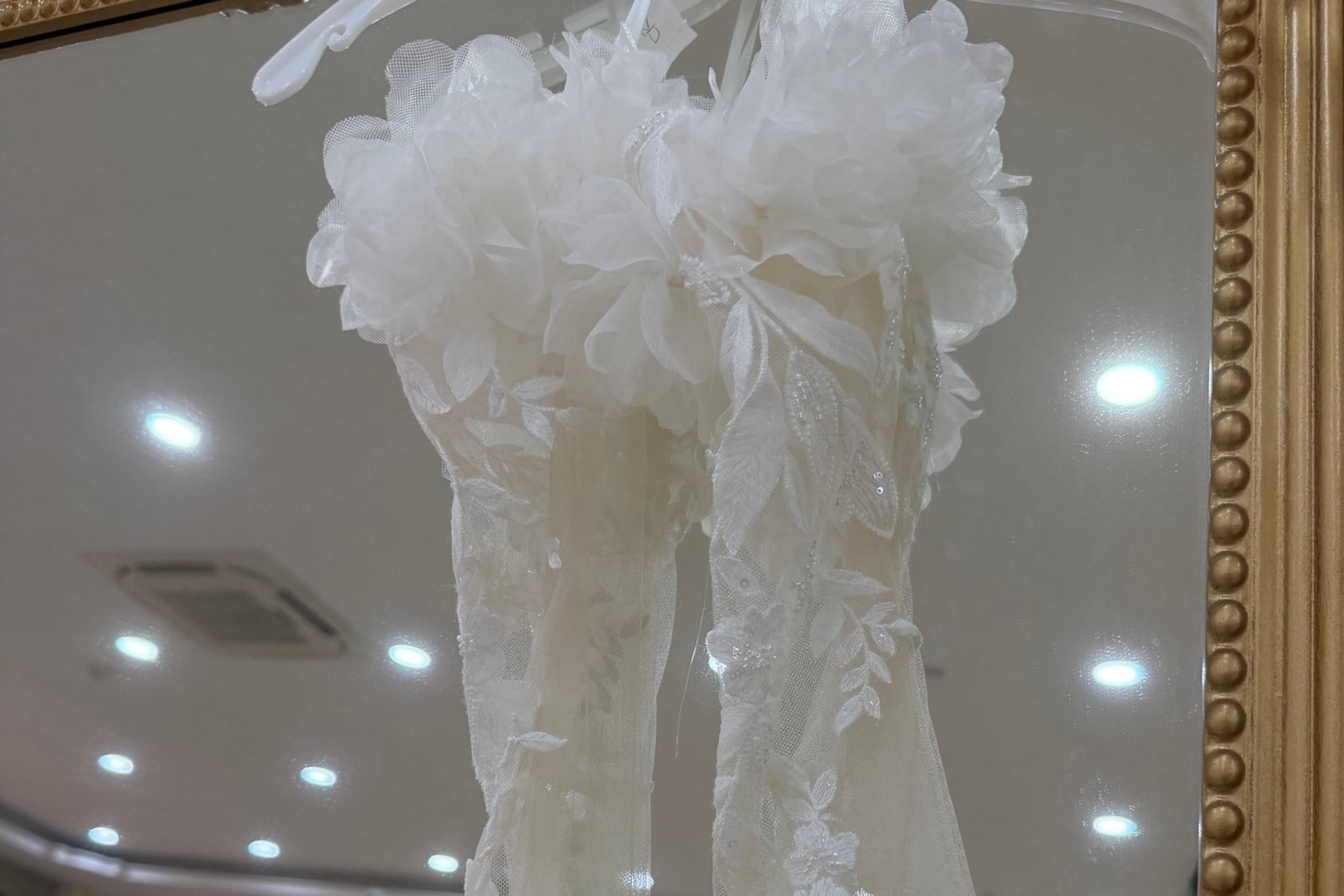
Detachable styling pieces are becoming more complex in 2027 samples, with some styles incorporating detachable chokers, tulle scarf ties, removable sleeves, overlay skirts, and separate jackets all designed to work with a single base dress. This creates significant merchandising flexibility—one dress can be styled multiple ways for different photo shoots, different venues, or different customer preferences—but it also introduces challenges in attachment consistency, styling logic, costing transparency, and production coordination.
The Production Reality of Multi-Piece Systems
When a brand asks us to develop a dress with multiple detachable pieces, the complexity increases exponentially because each piece needs its own pattern, its own quality control process, and its own attachment system that works reliably without damaging the base garment.
Let me break down what happens with a typical multi-piece development request:
Pattern Development:
- Each detachable piece requires its own pattern set
- The attachment points on the base dress must be reinforced without creating visible bulk
- The pieces must be designed so they do not interfere with each other when used in combination
Attachment Systems: We have tested several approaches:
- Hook-and-eye closures work well for structured pieces like sleeves or jackets, but they can be visible and they create small holes in delicate fabrics
- Snap systems are faster to use but can pull away from sheer fabrics or create puckering4
- Button-loop systems look more elegant but take longer to attach and detach
- Hidden zipper attachments work for overlay skirts but add cost and complexity
Quality Control Challenges:
- Each piece must be inspected separately
- The attachment hardware must be tested for security and ease of use
- The pieces must be packaged in a way that keeps them organized and prevents damage during shipping
- The brand must provide clear styling instructions—not just for the boutique staff, but for the bride who might be attaching these pieces herself
The Costing and Merchandising Complexity
Here is where the real challenge appears: how do you price and merchandise a dress system with multiple optional pieces?
Some brands treat the detachable pieces as separate SKUs, which gives boutiques flexibility but creates inventory management challenges. Others bundle everything together at one price, which simplifies the purchase decision but limits customization. We have seen a few brands trying a middle approach—base dress plus a choice of two add-ons at one price, with additional pieces available separately—but this requires very clear communication and accurate costing.
From a production standpoint, the most stable approach we have seen is:
- Design the base dress to work perfectly on its own, without any add-ons
- Create 2-3 key detachable pieces that genuinely transform the look
- Use consistent attachment systems across all pieces
- Provide clear styling guides that show which combinations work best together
The brands running into trouble are the ones trying to create 6-8 different add-on options without thinking through how these pieces will actually be used, stored, and styled.
What Is Changing Underneath Wedding Dress Skirts?
The surface of a wedding dress skirt might look similar year to year—tulle layers, full A-line shape, soft movement—but the internal structure is where significant evolution happens, and 2027 samples show a clear shift in how brands are approaching skirt volume.
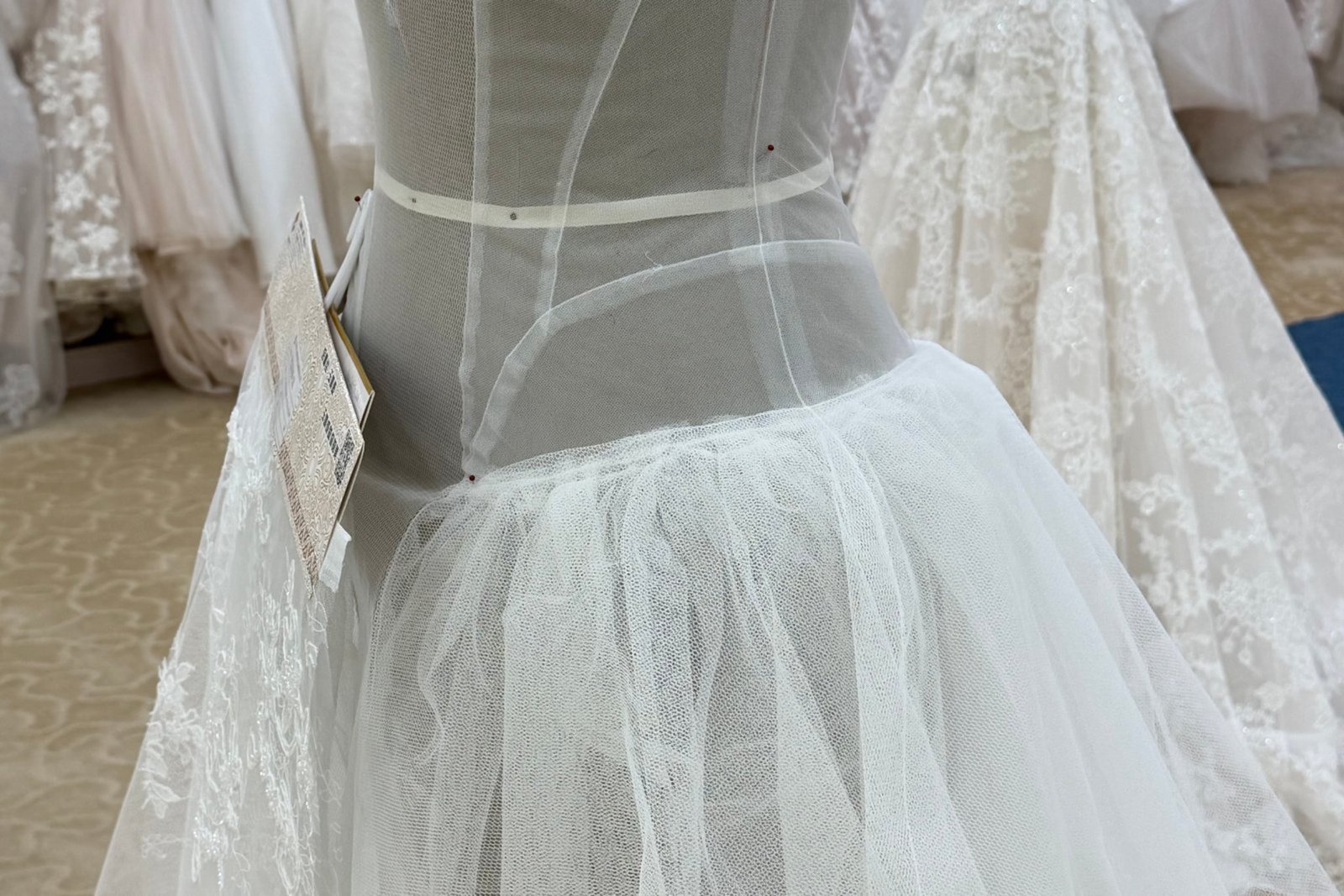
The most notable change we are seeing in 2027 skirt construction is the use of stiffer structural nets and gel-like materials that create volume without the heavy, opaque look of traditional coarse net layers. Brands are requesting skirt structures that maintain fullness and shape while appearing lighter and more translucent, which requires different material choices, different layering strategies, and different finishing techniques.
Why Skirt Structure Materials Matter
Most people outside the production side of bridal do not think much about what creates the volume in a full wedding dress skirt. They see the outer tulle layers and assume that is what makes the skirt stand out. But the real volume comes from the structural layers underneath—the nets and crinolines that push the outer layers into shape.
Traditional coarse net (sometimes called crinoline or stiff net) works well for creating volume5, but it has visual and practical limitations:
- It is opaque, which creates a solid, heavy appearance
- It can be scratchy and uncomfortable against the legs6
- It creates a very specific silhouette that does not move naturally
- It shows through sheer or lightweight outer fabrics
The new materials we are testing address these issues through different approaches:
Gel-Structured Net: This material uses a gel-like coating on very fine net to create stiffness without opacity. The gel makes the net hold its shape while remaining lightweight and more transparent. We have been testing this in samples where the brand wants visible skirt structure—where you can see through the outer tulle to the layers beneath, and those layers should look intentional rather than bulky.
The challenges:
- The gel coating can vary between dye lots, affecting stiffness consistency
- It requires more careful handling during construction because the gel can be damaged by excessive heat or pressure
- It costs more than standard coarse net, which affects the overall dress price point
Multiple-Layer Fine Net: Some brands are replacing 2-3 layers of coarse net with 5-6 layers of very fine, slightly stiff net. This creates a graduated structure where each layer adds a small amount of volume, building up to the full shape without creating the solid appearance of coarse net.7
This approach works well for:
- Dresses where the brand wants soft, romantic volume
- Styles where the skirt needs to move naturally rather than hold a rigid shape
- Price points where the extra labor for handling more layers is acceptable
The tradeoff:
- More layers mean more cutting, more handling, and more sewing time
- The layers must be carefully graduated in size to avoid creating visible ridges
- Quality control becomes more complex because each layer must be checked
How This Changes the Design Process
When a brand is developing a new skirt silhouette for 2027, the conversation used to start with the outer fabric choice and the overall shape. Now it starts with the structural materials and how they will affect the final appearance.
Here are the questions we are asking in early development:
| Design Goal | Material Approach | Construction Consideration |
|---|---|---|
| Maximum volume with soft appearance | Multiple fine net layers | Requires careful layer graduation and more sewing time |
| Visible structure as design feature | Gel-structured net or clear horsehair | Needs special handling; material cost higher |
| Lightweight feel with full shape | Combination of fine nets with strategic coarse net placement | Allows cost control while maintaining quality appearance |
| Natural movement with moderate volume | Silk organza or silk horsehair with minimal net | Premium materials increase cost; requires skilled construction |
The brands seeing the best results are the ones willing to test multiple structure approaches in sample stage, rather than committing to one method based only on sketches or flat samples.
Are Floral Fabrics Really Growing for 2027?
I am including this section because several brands have asked about floral fabrics in recent inquiries, but I want to be clear that this signal is much weaker than the three areas discussed above.
We are seeing a small increase in requests for wedding dresses using floral-printed fabrics or floral-embroidered base fabrics, rather than applied floral appliqués. This appears most often in daytime wedding styles, garden ceremony dresses, and second-look reception dresses rather than traditional formal bridal gowns.
The production considerations are different from applied florals:
- Printed fabrics require careful pattern matching, which increases cutting time and fabric waste8
- Embroidered base fabrics limit design flexibility because the floral pattern is fixed
- Color consistency becomes more critical because the florals must match across all pieces of the dress
This trend, if it grows, will likely remain in specific niches—brands serving outdoor weddings, destination weddings, or less formal ceremonies—rather than becoming a mainstream formal bridal direction.
How Should Brands Test These Trends Without Overcommitting?
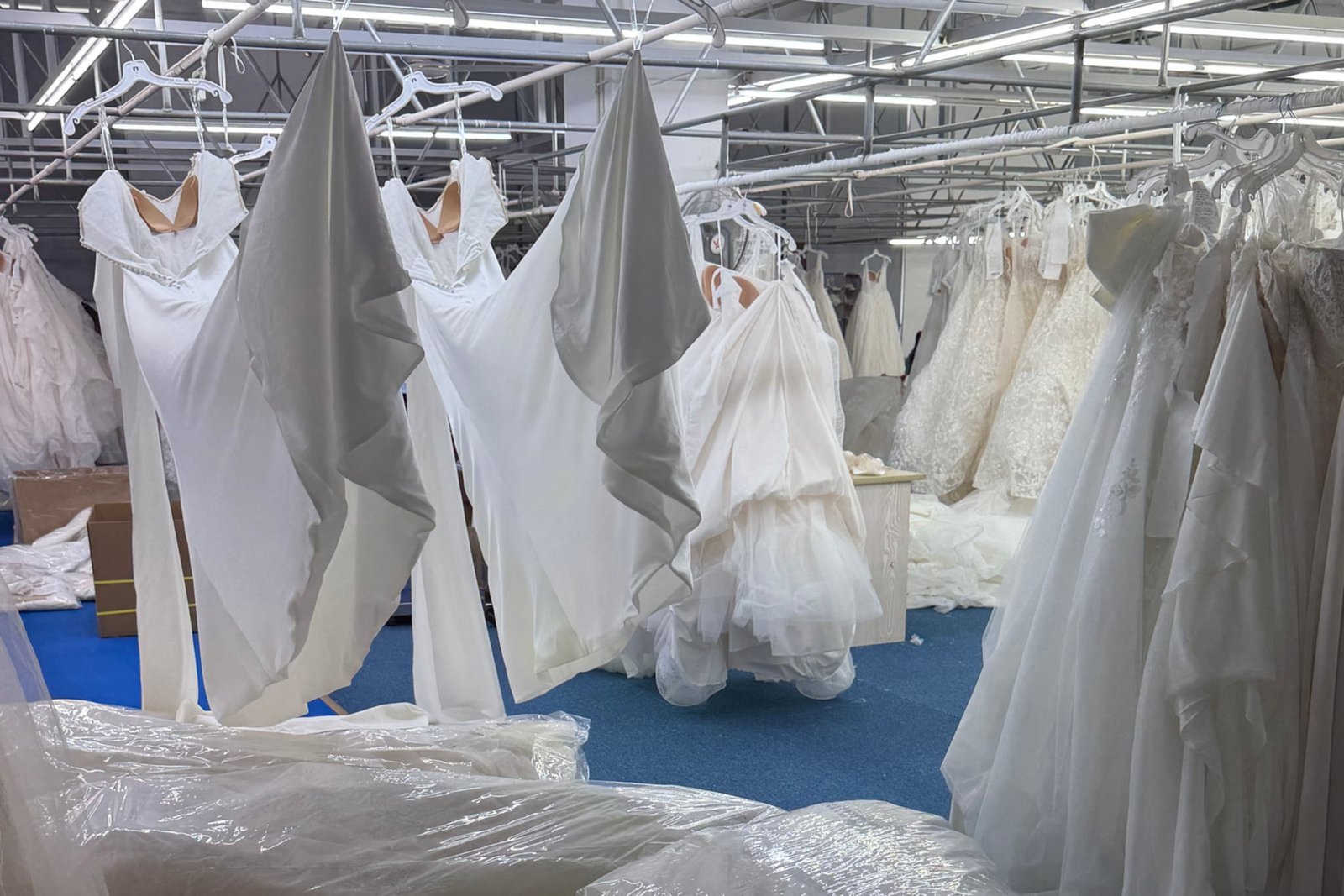
The gap between seeing an early trend signal and committing to full production is where most inventory and quality problems start. Just because we are building samples in a particular direction does not mean every brand should adopt that direction for their 2027 collection.
The most practical approach we recommend is testing trends through small sample runs that can be evaluated through real customer feedback before placing larger production orders9. This means developing 2-3 styles in each trend direction, producing 10-15 pieces of each style, and using those pieces to gather data from trunk shows, boutique floor tests, or online pre-orders before committing to full collection quantities.
What Small-Batch Testing Should Measure
The goal of small sample runs is not just to see if the dress sells—it is to identify which aspects of the trend work in real conditions and which create problems that would multiply at scale.
Construction Stability: Does the neckline hold its shape through multiple fittings? Do the detachable pieces attach securely after being removed and reattached several times? Does the skirt structure maintain its volume after the dress has been stored, shipped, and handled?
Fitting Consistency: When you produce the same style in multiple sizes, do you get consistent fit results? This is especially important for new neckline shapes or structural innovations where the pattern must be graded accurately across size ranges.
Customer Understanding: Do brides immediately understand how to use detachable pieces? Do they see value in the styling flexibility, or does it create confusion? Do they perceive the new skirt structure as better quality, or do they not notice the difference?
Boutique Feedback: Can boutique staff explain and style the dress confidently? Do they have concerns about damage, storage, or steaming? What questions do they ask that your product information does not answer?
Frequently Asked Questions
When should brands start sampling for 2027 collections?
Most brands we work with begin sampling for next year's collection 12-18 months in advance10, which means 2027 sample development is happening now through early 2026. This timeline allows for pattern development, sample production, buyer previews, pre-orders, and final production planning before the collection launches in late 2026 or early 2027.
How many samples should a brand develop before committing to a trend?
The minimum we recommend is 2-3 styles per trend direction, produced in at least 2-3 sizes to test fit consistency. This gives enough data to identify construction issues and customer response without overcommitting resources. Brands should plan for at least one round of pattern adjustments after initial samples.
Can these trend directions work across different price points?
Yes, but the execution methods differ significantly. Cat-eye neckline variations can work at various price points by adjusting the quality of boning, edge finishing, and fabric choice. Detachable pieces require more careful costing analysis because the attachment hardware and finishing quality directly affect perceived value. Skirt structure materials have the widest cost range—gel-structured net and silk horsehair are premium options, while strategic use of standard materials can achieve similar effects at lower price points.
What are the biggest risks in adopting these trends too quickly?
The primary risk is committing to large production quantities before testing construction stability and customer acceptance. A neckline that works in 10 samples might reveal fit issues when produced in 100 pieces across 8 sizes. Detachable pieces that seem innovative might confuse customers or create damage issues that affect returns and alterations. The secondary risk is inventory—trends that look strong in early samples might not sustain interest through the full collection cycle.
How do you decide which trends are worth testing?
We look at three factors: construction feasibility (can we build this consistently at the required quality level), material availability (can we source the materials reliably for production quantities), and customer pain points (does this trend solve a real problem or add genuine value). Trends that score well on all three factors are worth testing. Trends that are only visually interesting but create construction or material challenges usually do not translate well to full production.
Conclusion
The 2027 wedding dress trends we are seeing in current sample development are not about dramatic visual shifts—they are about refinements in construction, materials, and styling flexibility that give brands more merchandising options without creating inventory risk. Cat-eye necklines are evolving toward softer, more photographable curves. Detachable styling pieces are increasing in complexity, which creates both opportunities and challenges. Skirt structures are changing beneath the surface through new materials that maintain volume while appearing lighter and more translucent. These are early signals, not confirmed market directions. The brands
"Fashion Development and Product Management", https://textiles.ncsu.edu/academics/undergraduate/fashion-development-and-product-management/. Apparel product-development sources describe trend identification and manufacturability assessment as separate stages in commercialization, supporting the article's distinction between online trend signals and production-ready designs; this evidence is contextual and does not verify the author's specific factory observations. Evidence role: general_support; source type: education. Supports: Apparel product-development literature distinguishes market trend research from technical development, sampling, costing, and production planning.. Scope note: Contextual support only; it would not prove the size of the gap or the article's proprietary sample-request data. ↩
"Bending Seams – How to Create Couture Curves", https://par.nsf.gov/servlets/purl/10347623. Patternmaking literature explains that curved garment edges and seams require additional shaping and control during drafting and sewing compared with straight seams, supporting the article's claim that softer neckline curves increase construction complexity; the source would support the general mechanism rather than this specific cat-eye neckline. Evidence role: mechanism; source type: education. Supports: Patternmaking references should explain that curved garment sections require shaping, seam control, and fitting adjustments that differ from straight-line construction.. Scope note: Contextual mechanism; not direct evidence about 2027 bridal samples. ↩
"Fabric Drape - an overview | ScienceDirect Topics", https://www.sciencedirect.com/topics/engineering/fabric-drape. Textile-science studies associate fabric drape and bending rigidity with garment silhouette and shape retention, supporting the article's statement that softer fabrics may require added internal structure for shaped bodices; the evidence would not compare the exact bridal fabrics used by the author. Evidence role: mechanism; source type: paper. Supports: Textile research should show that drape, bending rigidity, and mechanical properties affect garment silhouette and structural support needs.. Scope note: Mechanistic support only; not a direct evaluation of duchess satin or structured crepe in these samples. ↩
"Experimental Analysis of the Relationship between Textile ... - PMC", https://pmc.ncbi.nlm.nih.gov/articles/PMC9824804/. Research on fastener attachment and fabric mechanical performance shows that localized stress can cause distortion or failure in lightweight fabrics, supporting the article's caution about snaps on sheer materials; the source would not necessarily compare snaps with hooks, buttons, or zippers in bridalwear. Evidence role: mechanism; source type: paper. Supports: A textile or apparel-engineering source should support that fastener performance depends on fabric strength, reinforcement, and stress around the attachment point.. Scope note: Mechanistic evidence; not a direct test of the specific snap systems used in the article. ↩
"Crinoline", https://en.wikipedia.org/wiki/Crinoline. Reference histories of crinoline define it as a stiffened petticoat, fabric, or supporting structure used to hold out a skirt, supporting the article's description of stiff net as a volume-building material; terminology varies by period and textile context. Evidence role: definition; source type: encyclopedia. Supports: A reference source should define crinoline as a stiffened petticoat, fabric, or structure used to support a skirt silhouette.. Scope note: Supports the historical and functional definition, but may not equate all modern coarse nets with crinoline. ↩
"Comfort Evaluation of Wearable Functional Textiles - PMC - NIH", https://pmc.ncbi.nlm.nih.gov/articles/PMC8585350/. Textile-comfort studies link fabric roughness, stiffness, and surface texture to tactile discomfort during skin contact, supporting the article's statement that coarse net may feel scratchy; such studies would support the comfort mechanism rather than evaluate bridal crinoline specifically. Evidence role: mechanism; source type: paper. Supports: Textile-comfort research should support that roughness, stiffness, and surface texture affect perceived scratchiness and comfort against skin.. Scope note: General comfort evidence; not a direct consumer study of wedding-dress nets. ↩
"The Influence of Structure of Multilayer Woven Fabrics on Their ... - PMC", https://pmc.ncbi.nlm.nih.gov/articles/PMC8141113/. Textile-mechanics literature shows that fabric layering changes bending stiffness, drape, and visual density, supporting the article's explanation that multiple fine layers can build volume differently from a single coarse layer; the evidence would be contextual and not specific to bridal skirt nets. Evidence role: mechanism; source type: paper. Supports: Textile mechanics sources should show that adding fabric layers changes bending stiffness, drape, opacity, and structural behavior.. Scope note: Contextual mechanism; does not directly prove the visual outcome in the described samples. ↩
"Examining Cut-and-Sew Textile Waste within the Apparel Supply Chain", https://bren.ucsb.edu/sites/default/files/2024-04/Examining%20Cut-and-Sew%20Textile%20Waste%20within%20the%20Apparel%20Supply%20Chain%204.10.24.pdf. Apparel manufacturing studies on marker planning and fabric utilization indicate that print or pattern matching constrains layout efficiency and can increase fabric waste and cutting complexity, supporting the article's production claim; the evidence may not be specific to bridal fabrics. Evidence role: mechanism; source type: paper. Supports: Apparel manufacturing research should support that print matching constrains marker layout and can increase fabric consumption or cutting time.. Scope note: General apparel-production evidence; exact waste increases depend on print scale, garment pattern, and production method. ↩
"Reducing the Risks of New Product Development", https://sloanreview.mit.edu/article/reducing-the-risks-of-new-product-development/. Product-development research on iterative testing and small-batch validation finds that early customer feedback can reduce uncertainty before full-scale production, supporting the article's recommendation to test bridal trends before large orders; the evidence is general and not limited to wedding dresses. Evidence role: general_support; source type: research. Supports: Product-development research should support iterative testing with small batches and customer feedback as a way to reduce uncertainty before scale-up.. Scope note: General product-development support; it does not validate the specific sample quantities proposed in the article. ↩
"Why Apparel Manufacturing Takes Longer Than You Expect", https://www.fashionindex.com/blog/apparel-manufacturing-timelines. Fashion product-development references describe collection planning, sample making, buyer review, and production as sequential activities that begin months before launch, supporting the article's 12- to 18-month sampling timeline as plausible; the source may not document the exact schedule for every bridal brand. Evidence role: general_support; source type: education. Supports: Fashion product-development sources should describe long lead times for line planning, sampling, buyer review, and production before retail launch.. Scope note: Supports plausibility of the timeline, not the specific practices of the author's clients. ↩